



 Arguments







Has solar cycle 24 begun?
Posted on 18 December 2007 by John Cook
Being a bit of a solar geek, I take great interest in the fact that magnetic activity has been spotted on the sun's surface that may signify the beginning of solar cycle 24. A new solar cycle begins when sunspots appear with opposite magnetic polarity compared to the previous cycle. They also appear at high latitudes, around 25 or 30 degrees. The region that appeared last week fits both criteria - high latitude and magnetically reversed. The only problem is there is no sunspot (a fairly large stumbling block). The region is just a bright knot of magnetic fields but if the fields coalesce into a dark sunspot, Solar Cycle 24 will be considered to have officially begun.

What is the significance? The sun goes through 11 year cycles - it was last hottest around 2001 and solar activity has been gradually falling since until the current solar minimum. Cycle 23 ended earlier in 2007 and no sunspots have been observed for a number of weeks. Cycle 24 was predicted to begin around March 2008 so if it's started, it's slightly ahead of schedule. This may indicate a stronger cycle - generally, faster cycles equate to more intense solar activity. But it's still too early to call (particularly considering the false alarm in August 2006).
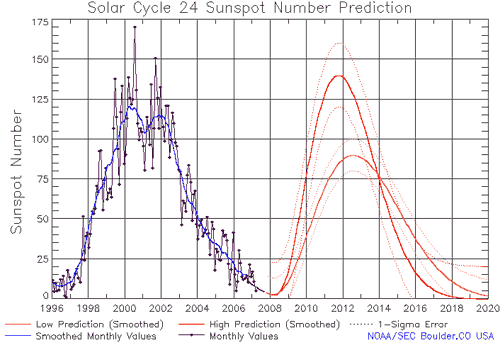
The one thing we know is over the next 5 years, solar activity will continue to rise, peaking around 2012. Tung 2007 estimates the solar cycle contributes around 0.18°C to global temperatures (more on Tung's work...). In other words, from 2001 until present day, falling solar activity reduced the global warming trend by 0.18°C. And over the next 5 to 6 years, the warming sun will add 0.18°C to global temperatures, roughly doubling the global warming trend. The only positive I can take from this is several years from now, at least we won't have to listen to the "global warming stopped in 1998" argument any longer.
UPDATE 6 Jan 2008: the first sunspot of Solar Cycle 24 has been observed and the NOAA Confirms Start of New Sunspot Cycle.
UPDATE 25 Mar 2008: And I thought I was a solar geek. For every scrap of up-to-date solar data, you can't go past www.solarcycle24.com which contains all the latest goss on the sun. If a sunspot is to be found, you'll hear it first there!
.









the positives.