Sea level rise: coming to a place near you
Posted on 18 March 2011 by Daniel Bailey
It has been said that our coastal cities are but castles made of sand. And like sand, they will fall into the sea, eventually. No one can tell the day or the hour, but with the expected rise of sea levels from the warming of the world and the measured melt of its polar regions, we know that it will happen.
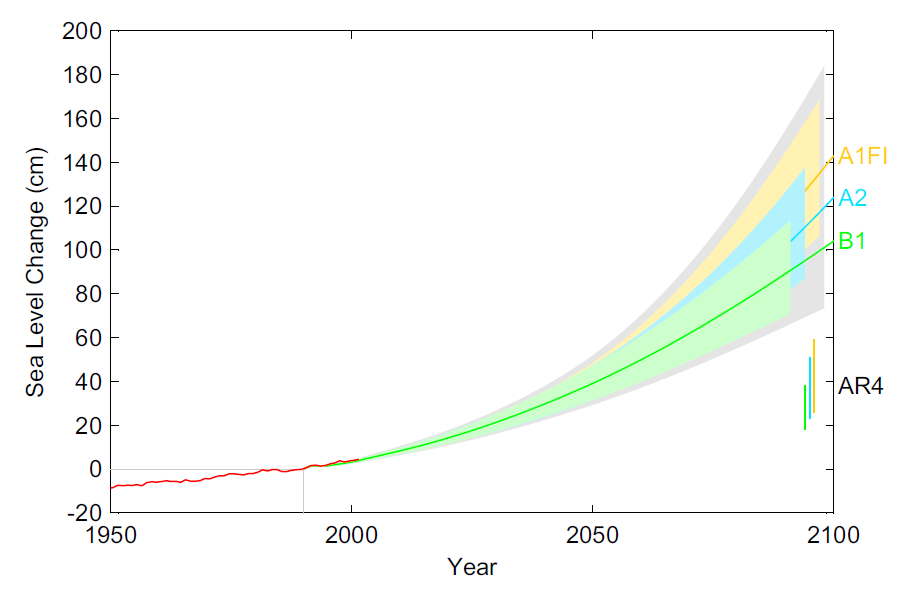
Figure 1 (Vermeer & Rahmstorf 2009). Current projections call for 1 or more meters of sea level rise by 2100
Currently we're on track to reach 1 meter sometime between 2070 and 2090 in business as usual (the A scenarios), and even most likely by 2100 in Scenario B1 (which assumes a major move away from fossil fuels toward alternative and renewable energy as the century progresses).
A wise man once asked:
"How many roads must a man walk down before you call him a man?
How many years must a mountain exist before it's washed to the sea?
How many times can a man turn his head pretending he just doesn't see?
How many deaths will it take till he knows too many people have died?
The answer my friend is blowin' in the wind..."
The effects of sea level rise, like the meaning of the song above, is different to each of us. So what will sea level rise look like where you live, when it does come? Using the map visualization tools provided from the Department of Geosciences at the University of Arizona, we can figure that out. Let's take a look, shall we?
America the Soggy
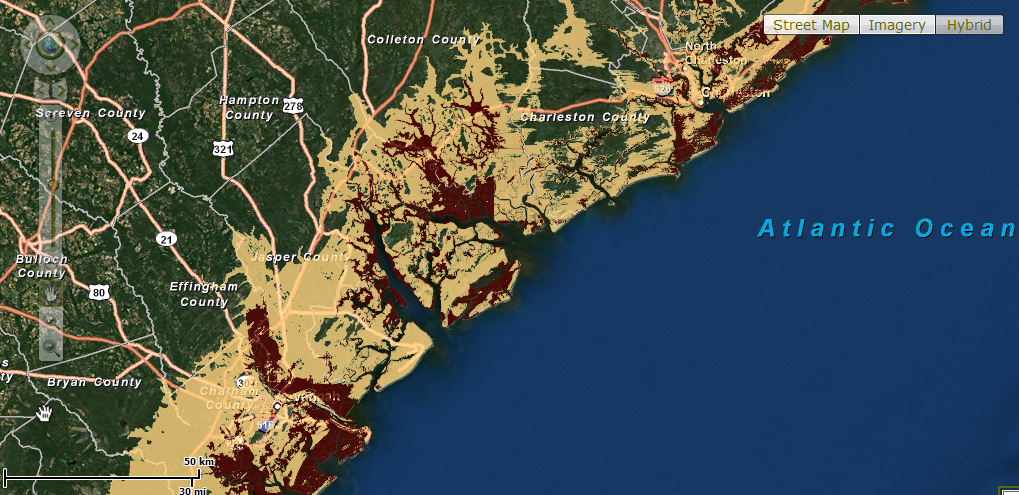
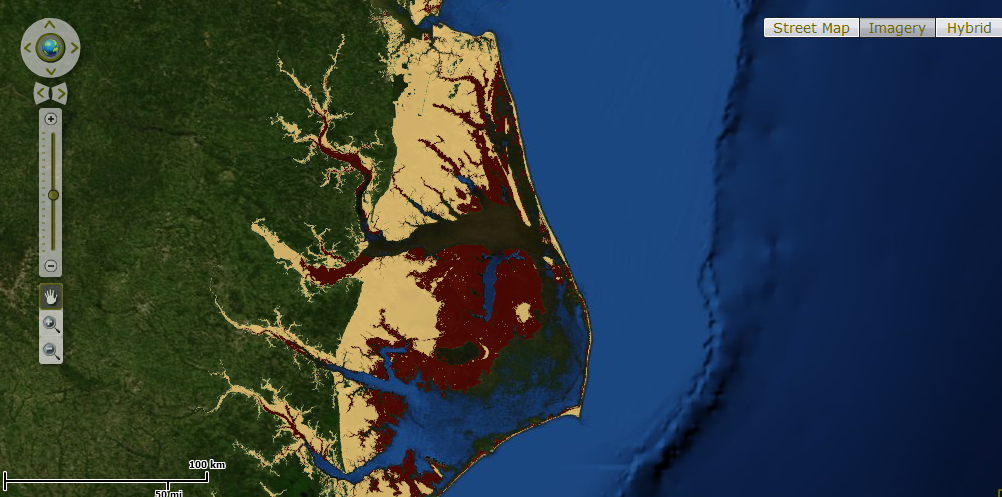
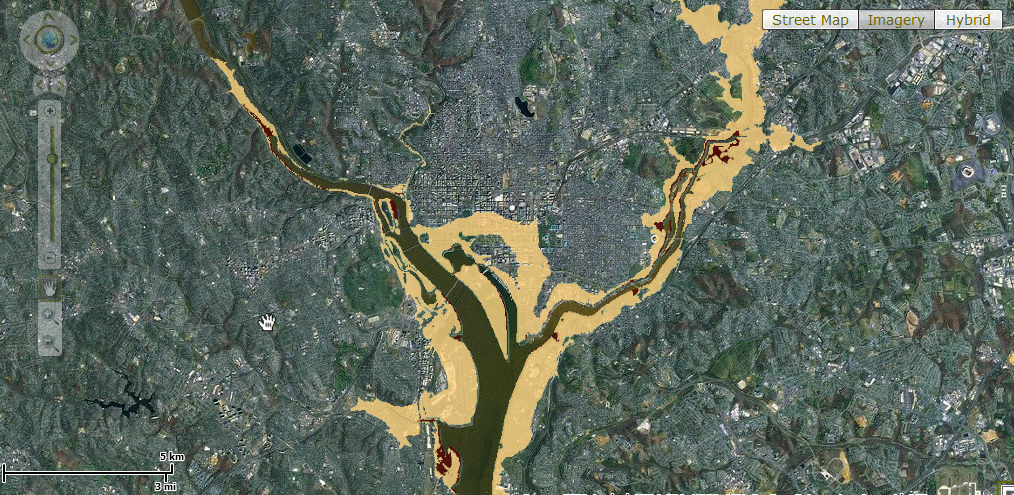
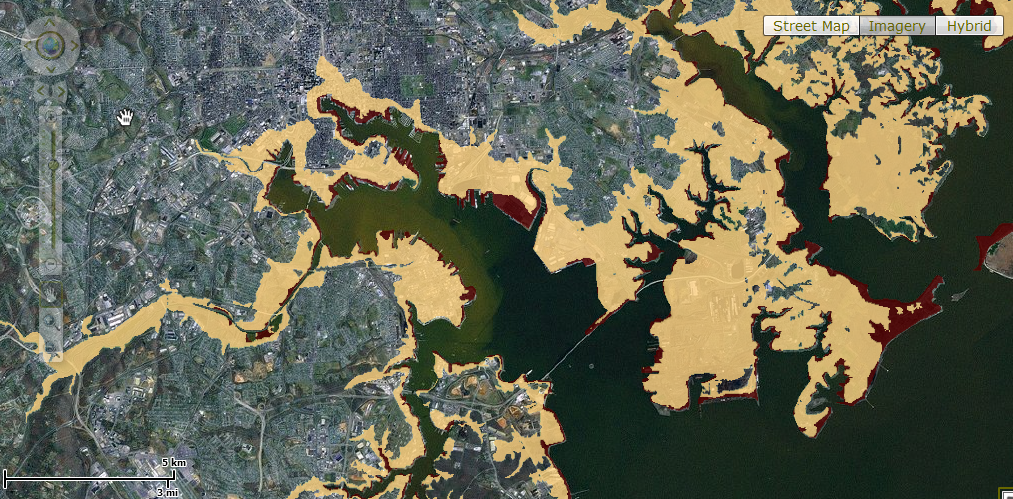
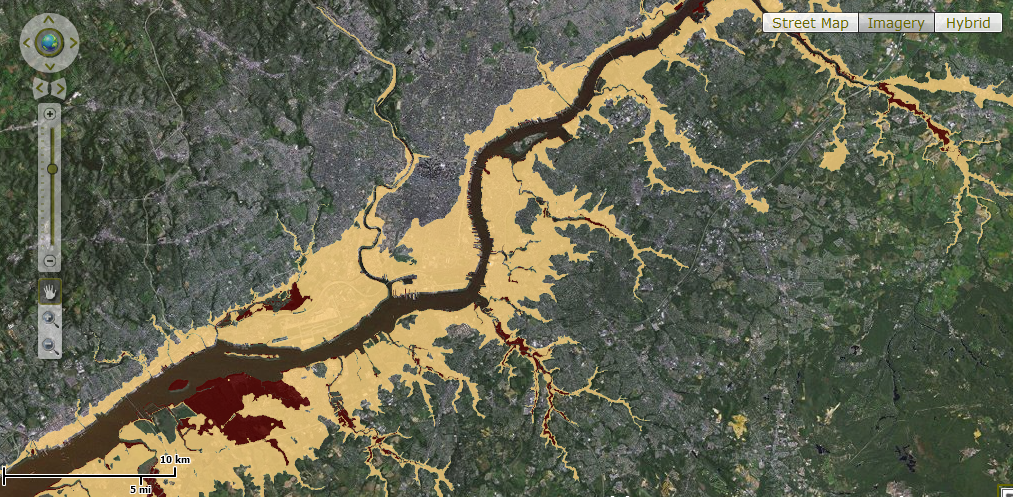
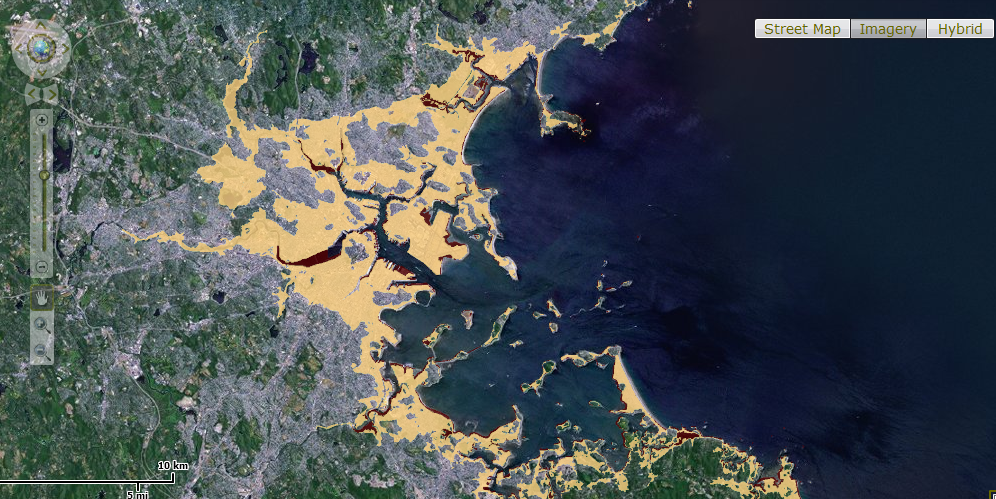
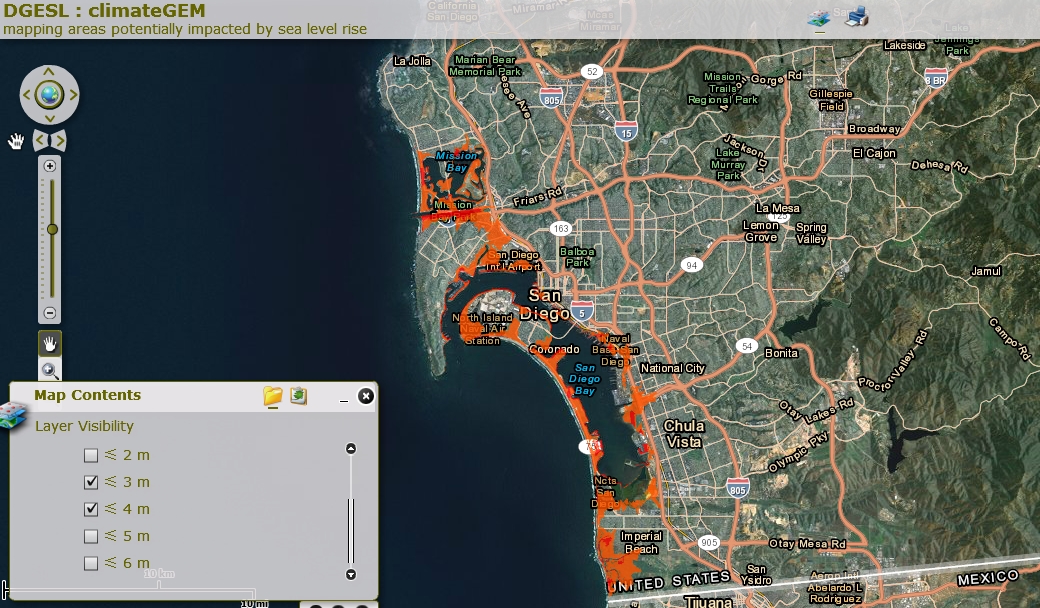
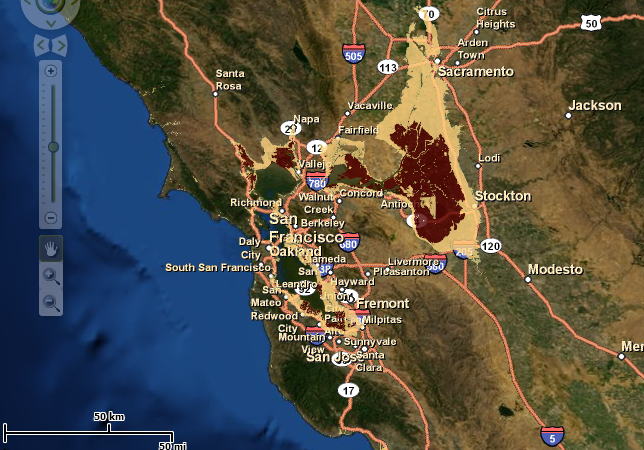
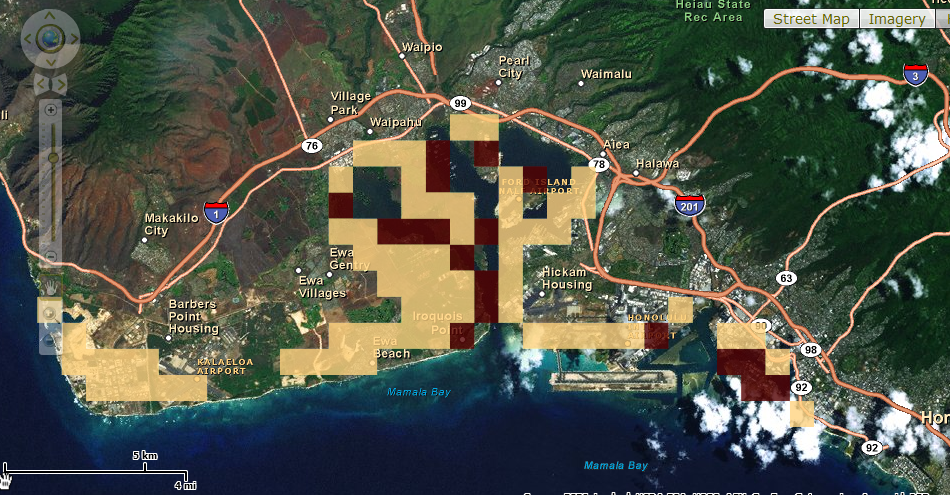
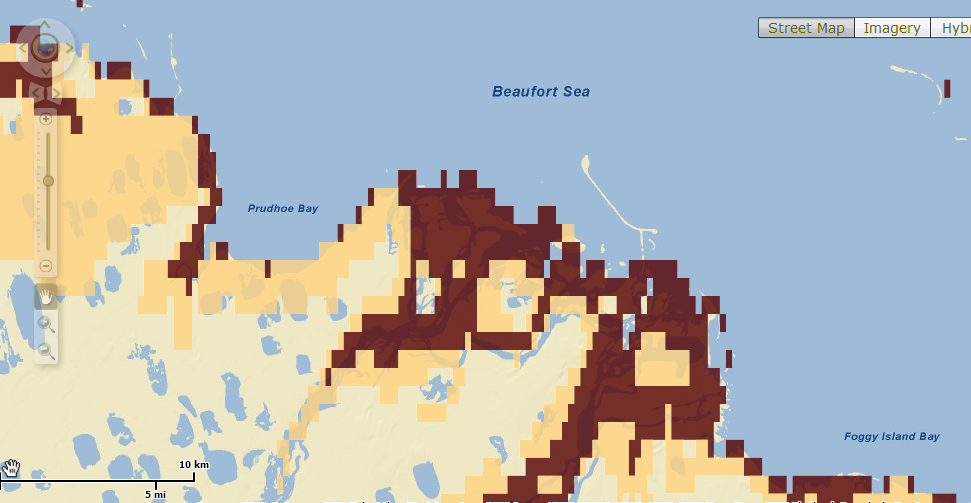
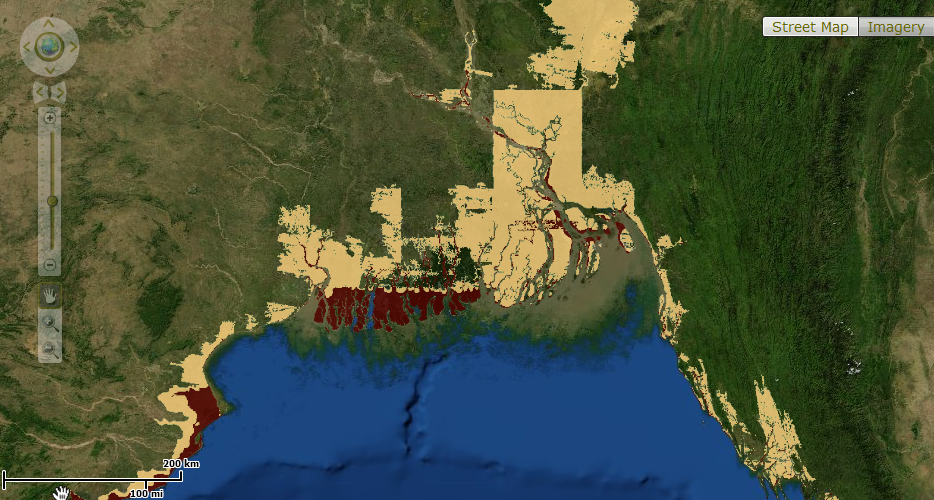
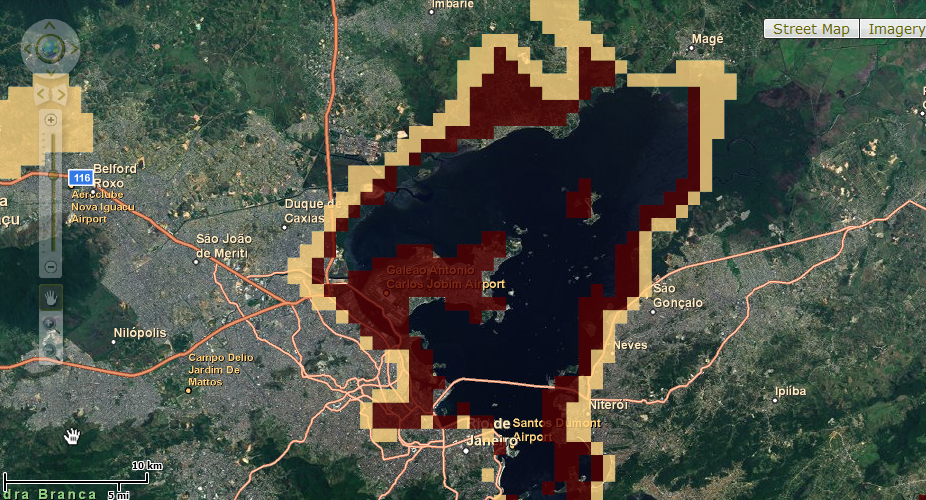
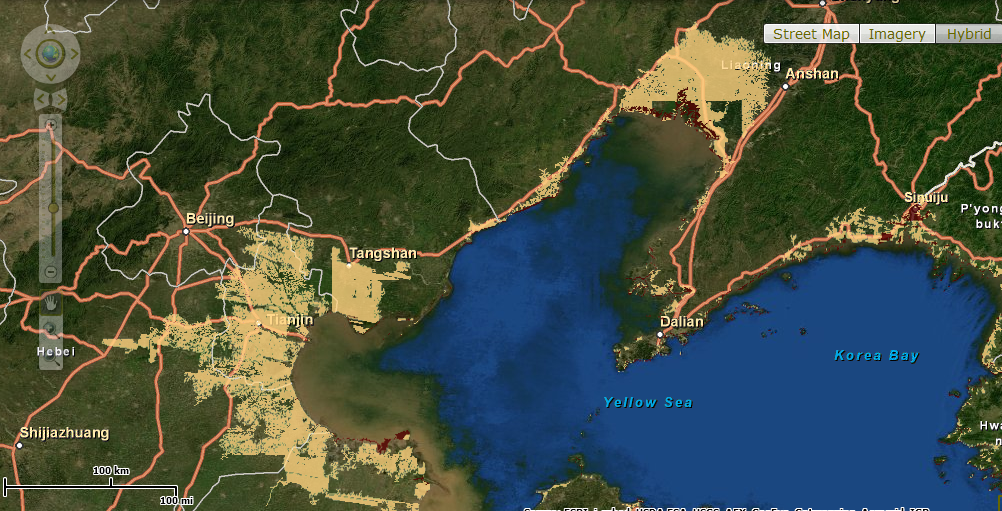
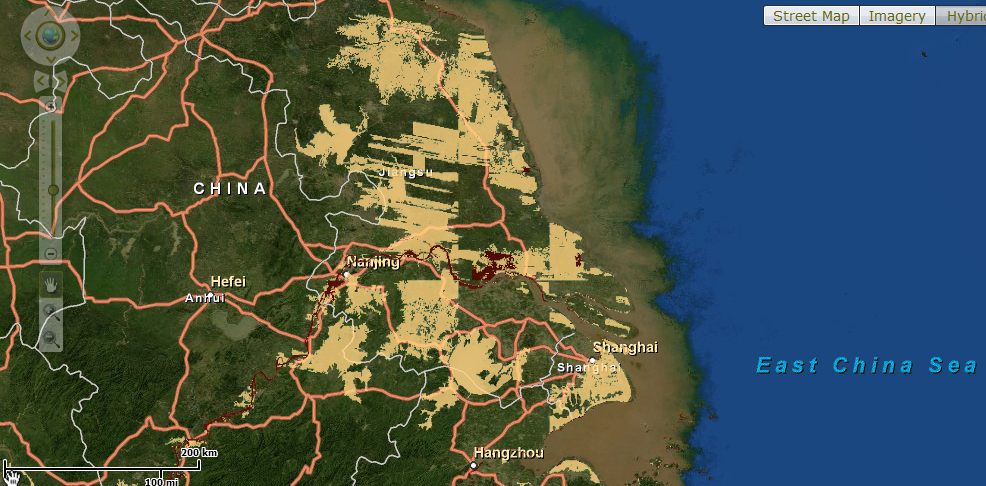
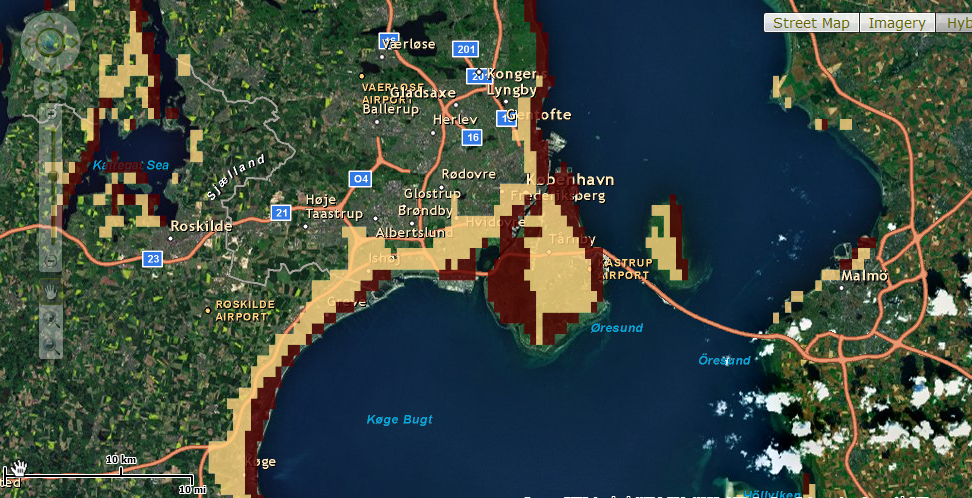
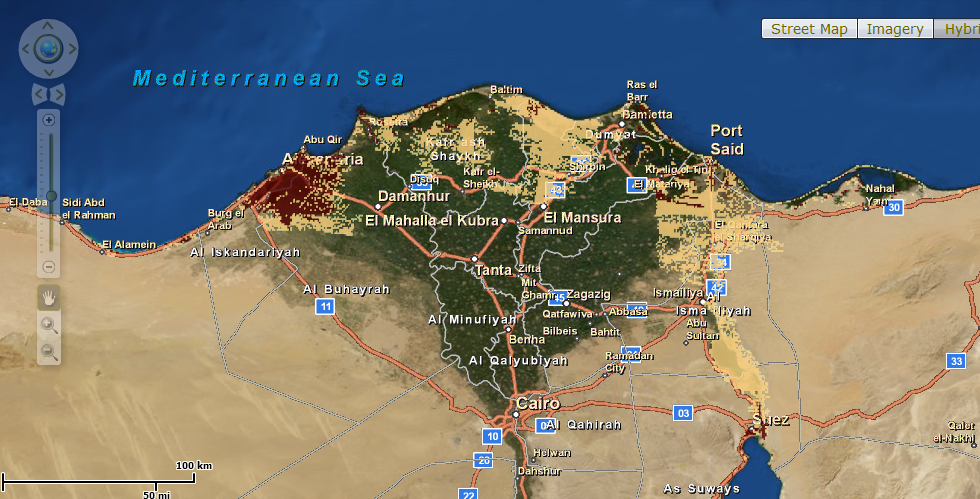
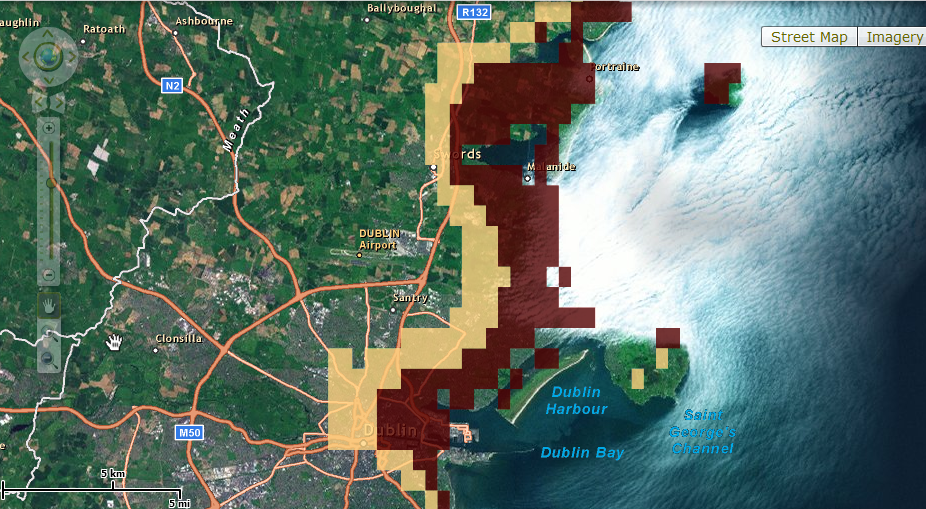
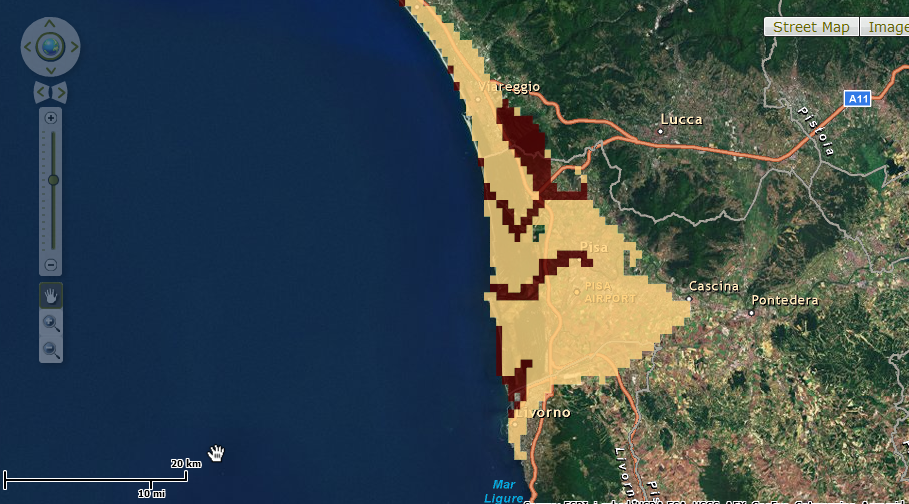
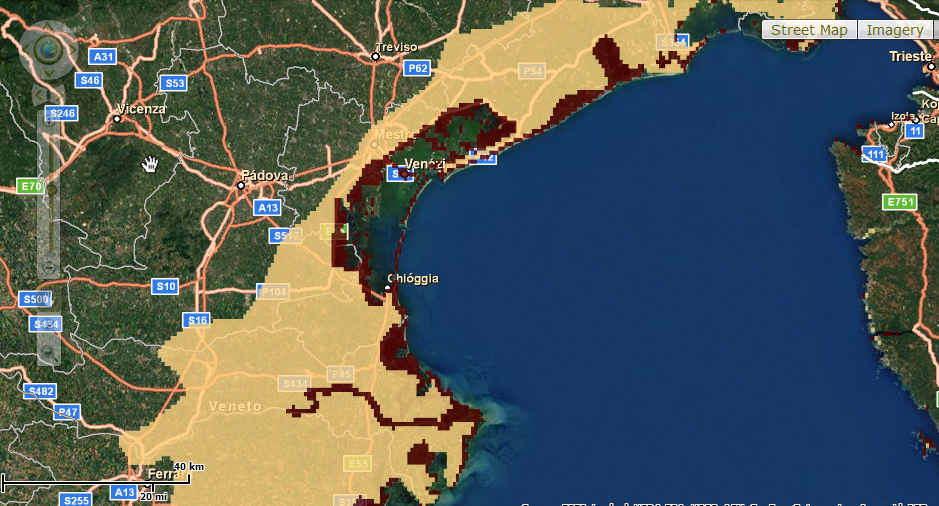
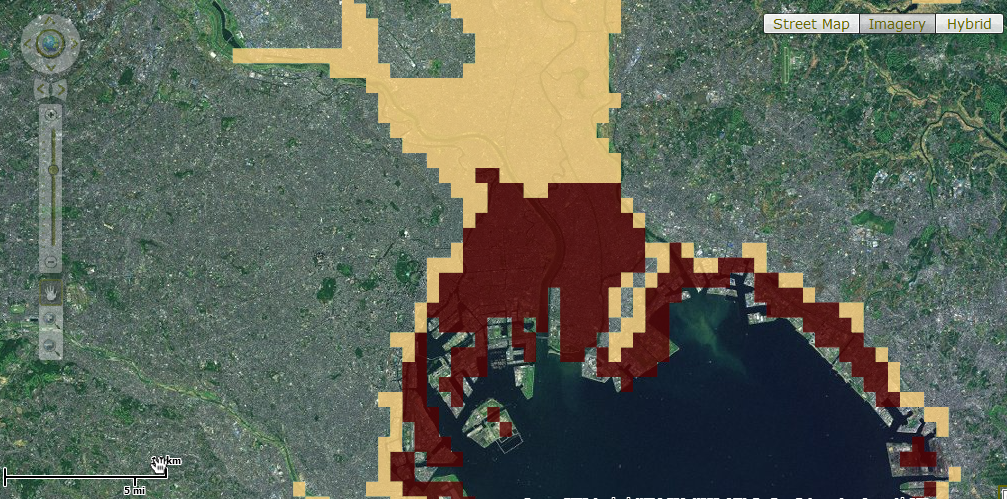
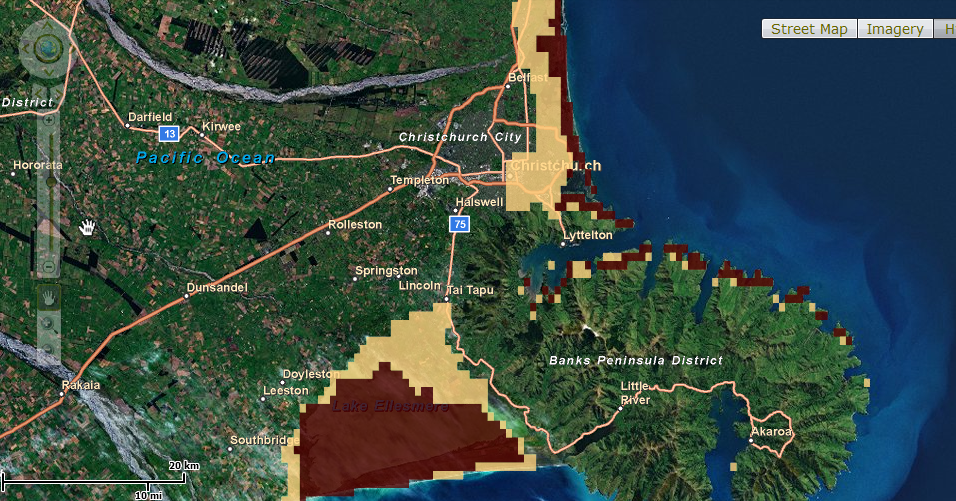
Portions of the United States stand to be hard-hit by sea level rise. None will be more impacted than New Orleans, Louisiana and Miami, Florida. Note that the areas in red delineate those inundated by the first meter of sea level rise, those in tan (sorry, didn't pick the colors) by an additional 5-meter rise in sea levels above and beyond the first meter of rise (for a total of 6 meters of rise).
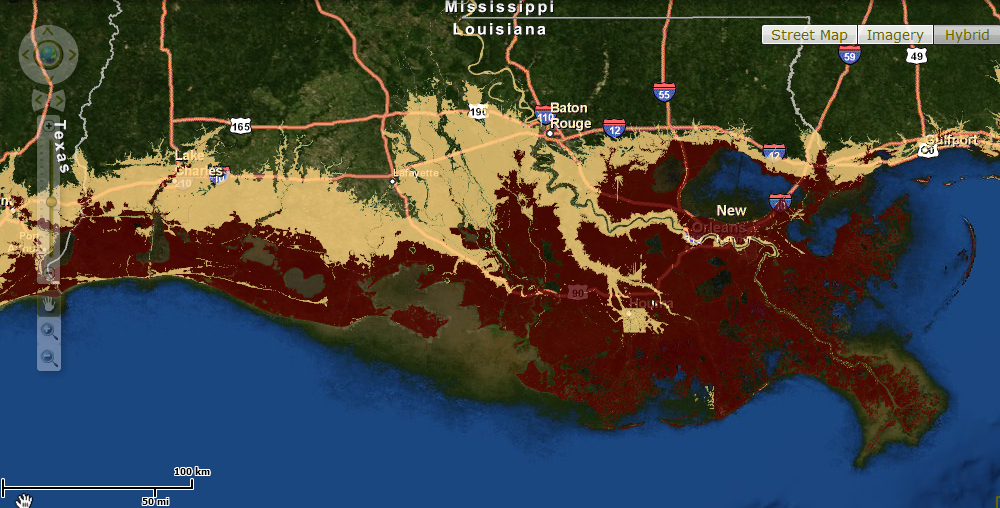
Map 1. New Orleans This time, the story's over.
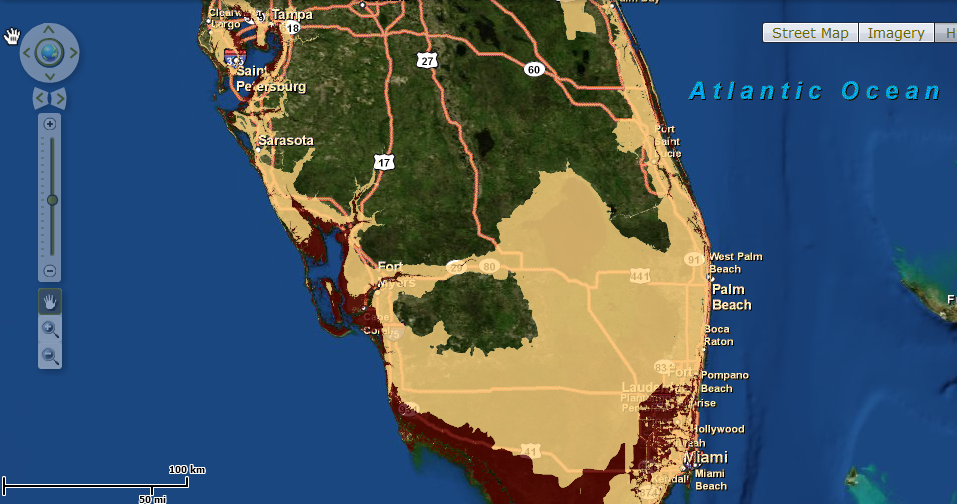
Map 2. Miami and south Florida. Our memories of South Beach will only come from reruns of Miami Vice.
Moving up the Atlantic coast, other impacted areas include: Savannah - Charleston, Cape Hatteras, Washington DC (see below for the close-up of the Nation's Capital), Baltimore, Philadelphia, New York City and Boston.
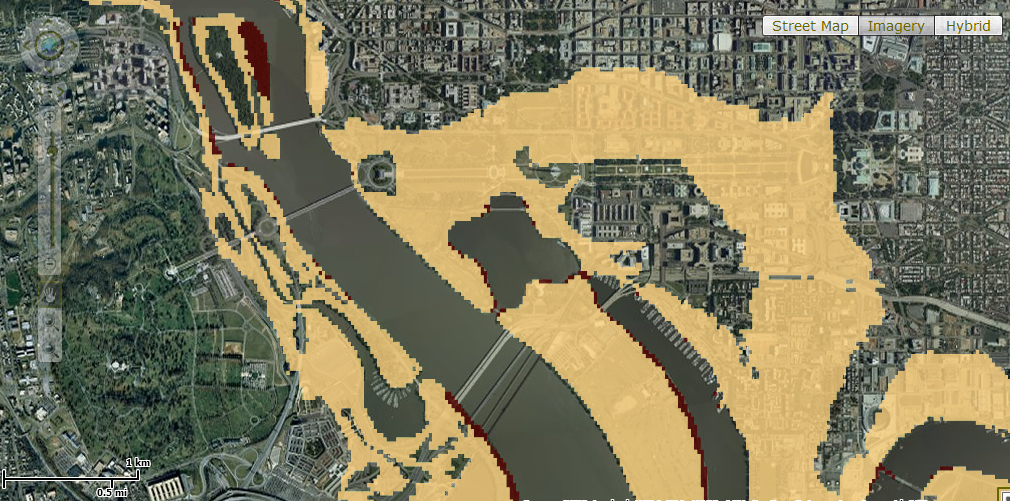
Map 3. Washington DC (closeup). Yes, we did (it).
A look at the rest of the US: San Diego, San Francisco, Honolulu, and Prudhoe Bay of Alaska
Water World
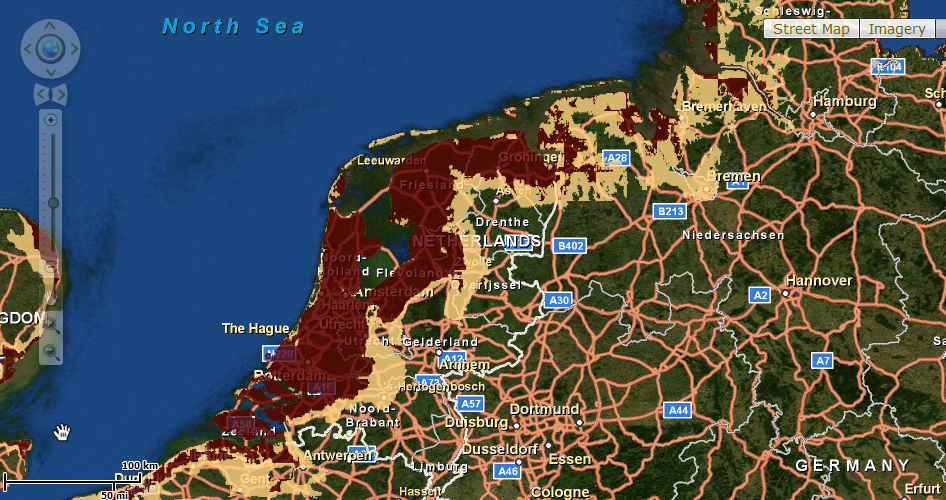
Map 4. One meter of sea level rise wipes out the International Court at The Hague; 6 meters, most of the Netherlands.
Brazil: Rio de Janeiro
Denmark: Copenhagen
Egypt: Cairo
Ireland: Dublin
Italy: Pisa, Venice, downtown Venice
Japan: Tokyo, downtown Tokyo
New Zealand: Christchurch
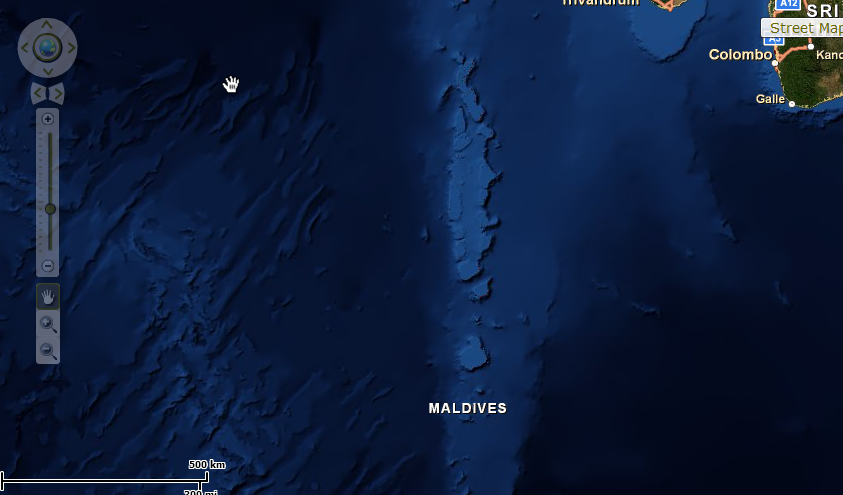
Map 5. The poster child for sea level rise, the Maldives was once a vast island during the last glacial maximum, when sea levels were at their lowest ebb. Reduced now to but a string of island dots on a map, the Maldives will soon cease to be anything but a distant memory for our descendants. And a lasting testament to the willful folly of mankind.
We live now, in the present. Here in the present, sea level rise of the magnitudes portrayed above have yet to come to pass. But they will, eventually. Perhaps not in our lives but in that of those that yet live, or have yet to be. But come, it will.
And how many nations will cease to be before mankind acts? How many cities inundated? How many lives lost? The answer, my friends, is blowin' in the wind...

Arguments


A storm (usually combined with moon setting) in 2006 caused an almost 5 meter sea level rise above the average level in Holland, but the dikes still held (in contrast to 1953 which killed 1863 people, causing a huge delta plan with new dikes and barriers to prevent that form ever happening). The whole system is constantly maintained, monitored, fortified and updated, in contrast to poor countries with low lying areas.
I'm not saying sea level rise won't be a problem, but for Holland the consequences won't be like portrayed in the map.
[DB] Rates of isostatic rebound experienced thus far will be dwarfed by the rates of SLR to get to the 1 meter SLR expected by 2100 (1,000mm over 90 years). Unless Hansen is right about the nonlinearity of ice sheet loss to come, in which case that rate jumps to 5,000mm over 90 years.
The current mapping tool does not reflect impacts from isostatic rebound; some future iteration will (it is being looked at).
I'm guessing that Scandanavia, like Scotland, is experiencing rebound after the last Glaciation. The potentially bad news for piloot is that the extent of Glaciation in the UK means that the lower half is sinking due to the same effect. The same could be true of the Netherlands, since it lies at a similar latitude.
The point being is that you have to think in terms of mean or average increases, then add your highest yearly tides, storms etc.
The result is that flooding occurs more frequently.
it looks like there should be close to 5 cm/decade, but we are only measuring 3 cm/decade.
[DB] Sorry for that, Eric. I had to compromise with what to show or not show for the exact same reason. When I created the original files, I used cartographic license to decide the optimal scales to visually depict each area affected by SLR. Too small a resolution would have compromised many a picture.
Anyone can use the linked mapping program to look at any location in the world themselves (for those feeling left out because I didn't choose their city). It's actually pretty simple to use.
For folks in Australia, I highly recommend the OzCoasts mapping found here. It's based on much higher-resolution elevation data than the Uni of Arizona mapping, so gives a more accurate picture for the selected areas of Australia that have been mapped.
Having said that, they only look at up to 1.1m of sea level rise, as their "high level" SLR. Their interface kinda sucks, too, for people used to Google Maps style pan & zoom interfaces!
I think the mapping at this site is not bad, also. It lets you look at SLR up to +60m (the *real* worst-case scenario, though it'd most likely be centuries away)
could you be more precise about what you mean by "being on the track?" with an exponential extrapolation with uncertainty, it seems that we're "on the track" to reach anything between 30 cm and a few meters.
Please note a convenient feature of exponential extrapolations : any increase of uncertainty increases more the high values than the small ones, so increases both the average estimates and the "probability" of highest estimates. This has the logical consequence that the less we know, the more we're urged to act.
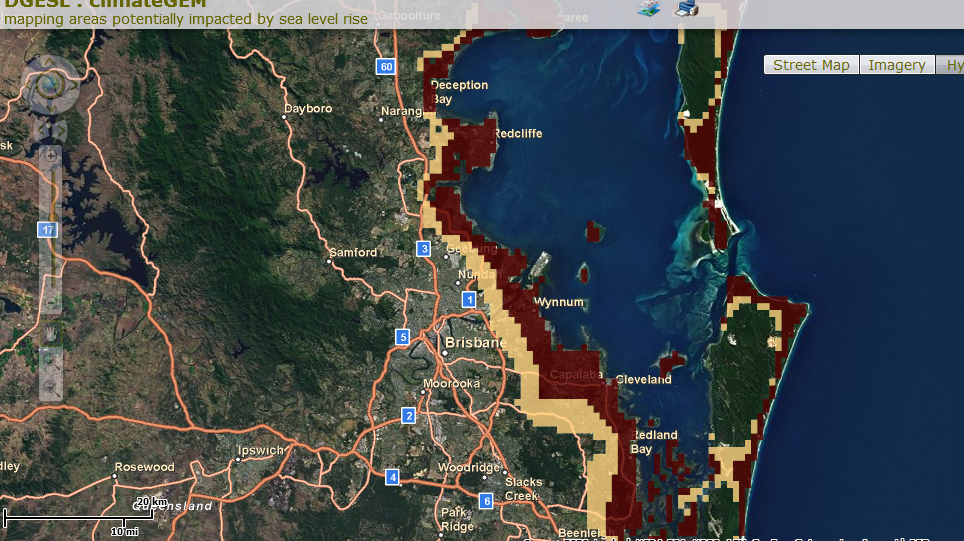
That said, it looks like care is needed when applying it outside the USA where it has a "horizontal resolution of 1 km" compared to a much more accurate "30m" with the US. 1km is probably fine for large low lying areas but not much good for coastal cities based around low hills (Brisbane, Australia is a good example).
Comparison the Brisbane prediction to data from much higher resolution maps from the Oz govt linked to by Bern (comment 10), shows good agreement for some areas; i.e.: with 1.1m SLR and a high tide Brisbane airport will either need a sea wall or sea planes. But low agreement in other areas; i.e.: some coastal suburbs suggested to be mostly underwater, will be still above water, though not unscathed by 1.1m SLR.
So yes a useful tool but requires care outside the US.
No doubt a number of countries have produced high resolution maps of land that could be lost to sea level rise. Perhaps links to some of these would be a good addition to the excellent resources on this site, as well as being useful for those of us outside the USA.
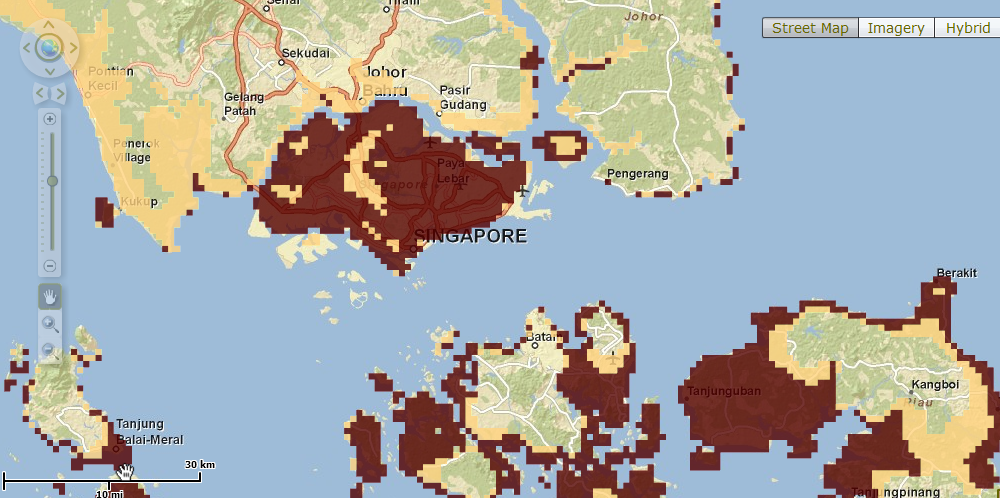
It seems to me that the potential inundation map of Singapore is factually wrong. The terrain is really low, but it is unlikely that more than half of area is less than 1 m above sea level.
I have not examined appropriate reference books yet, but by a quick Google search, I find an academic geographic paper by R.D. Hill (1980) Singapore - An Asian City State. Though subscription is needed to read the whole text, I can read its first page which contains "Tab 1. Singapore Island: Areas of various elevations (%)" with "Source: Wong 1969", and the percentage of "0 - 15 m" is 63.7. So, 36.3 % of the area has elevation higher than 15 m.
It seems that the national data of Singapore were mis-interpreted, probably during the editing of the global elevation data set, before the global data set was incorporated in the analysis by the Univ. Arizona team.
Where I live is safe (100 meters above sea level) but other areas of the city are not so lucky. I would like to see where and how extensive those areas are.
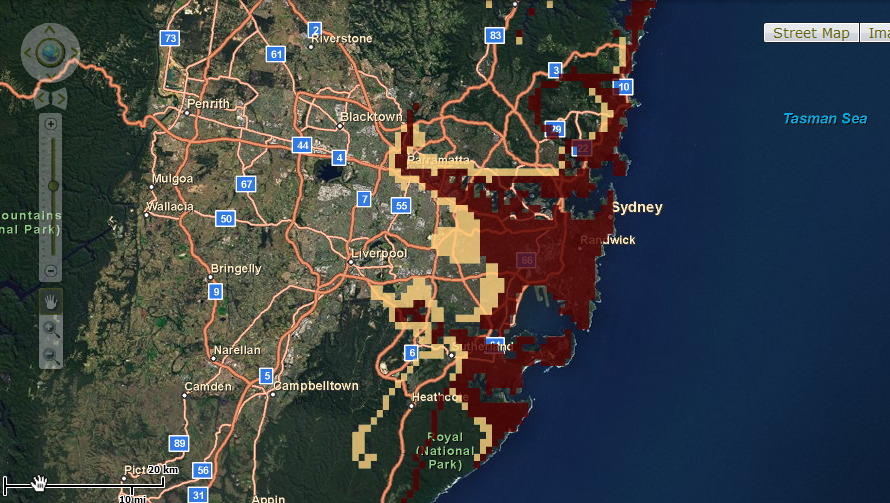
The issue is that outside the USA the tool has a "horizontal resolution of 1 km" which might work ok for somewhere like Melbourne, but not Sydney or Brisbane (to keep it local).
See here for some higher resolution info on the effect of SLR on Sydney. It only goes up to 1.1m so gives some indication of what will likely happen this century.
I wonder how many are aware that that the Maldives on on a limestone platform of over 2000 meters thickness. The volcanic substrate upon which the island chain rests is 2000+ meters below the surface, yet the islands remain. How does that happen?
Darwin figured it out in 1837. His hypothesis was that coral atolls were large coral/limestone formations on top of submerged volcanic rock. In 1896-1896 the Royal Society of London drilled on that other post child of CAGW activists, Tuvulu. They got down to more than 1100'/340 meters and were still in limestone created by corals.
Corals don't grow very fast if submerged more than a few 10's of meters. The existence of coral atolls through the many past changes in sea level are a testament to the resiliency of the coral atoll systems.
It's very likely Dan Bailey is correct and the Maldives will be submerged in the future. Like Pacific atolls, the Maldives were subjected to higher than present sea levels earlier in the Holocene. See Kench 2008. Accordingly these atolls too will have solid reef flats that formed during this period of higher sea level. These serve to protect them from long-term sediment loss. However once the reef flats are submerged by the rising high tide, the coral rubble, sediment and thin soils which have accumulated, will be subject to wave damage. Add ocean acidification & coral bleaching into the mix and the future looks a bit dicey.
It's a fallacy that atolls, as they now appear, have existed for a long time. They only began forming once the rising sea level, coming out of the last glacial maximum, submerged the atoll summits which formed during the previous interglacial. Something Darwin was unaware of when he first proposed his reef formation hypothesis.
An eye-grabber is this figure:
According to this, the recent rate of sea level rise is greater than its average value since 1930. Significantly so (in the statistical sense), even using a conservative estimate of autocorrelation. But the increase itself hasn’t been steady, so the sea level curve hasn’t followed a parabola, most of the increase has been since about 1980.
Once again, a long term uptrend, with a noticeable change in the late 70's-early 80's. The rate of increase increases. Kind of a deja vu all over again.