



 Arguments









Microsite influences on the temperature record are minimal
What the science says...
| Select a level... |
 Basic
Basic
|
 Intermediate
| |||
|
Microsite influences on temperature changes are minimal; good and bad sites show the same trend. |
|||||
Climate Myth...
It's microsite influences
U.S. weather stations have been located next to exhaust fans of air conditioning units, surrounded by asphalt parking lots, on blistering-hot rooftops, and near sidewalks and buildings that absorb and radiate heat. 89 percent of the stations fail to meet the National Weather Service’s own siting requirements that stations must be 30 metres away from an artificial heating or radiating/reflecting heat source. (Watts 2009)
The website surfacestations.org enlisted an army of volunteers to photograph US surface temperature measurement stations and document stations located near parking lots, air conditioners, or anything else that might impose a warming bias. They found that 89% of the stations did not meet the US weather service siting criteria in one way or another. That is not good. Does this prove that a US warming trend is just the artificial influence of parking lots and air conditioners on the temperature record coming from "bad" stations?
No. Actually, an analysis shows that "good" and "bad" stations show very similar trends for temperature over time. The chart below compares data from stations that surfacestations.org identified as "good", as well as "bad" stations. Notice that "good" stations track very closely to "bad" stations, and actually the "good" stations show more of a warming trend!
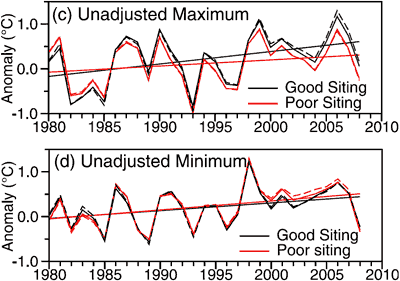
Figure 1. Annual average maximum and minimum unadjusted temperature change calculated using (c) maximum and (d) minimum temperatures from good and poor exposure sites (Menne 2010).
The volunteers from surfacestations.org deserve credit for pointing out siting problems of the US Weather Service temperature measurement stations. Unfortunately the fact that "good" and "bad" stations show the same upward trend proves that warming in the US is not just a measurement problem. Temperatures are trending upward around the globe, not just in the US. Microsite influences on temperature measurements in the US can't explain the US temperature rise, much less the global rise.
Basic rebuttal written by Jim Meador
Update July 2015:
Here is a related lecture-video from Denial101x - Making Sense of Climate Science Denial
Last updated on 15 July 2015 by pattimer. View Archives







The change of the temperature merely in 1 degree has a huge impact on climate change issue. To find the way to limit, control and slow down the process of global warming the scientists do need the accurate information. So no matter how close of the good and bad station data is, we should set up the station in the place that can get the closest result to the actual temperature on earth. The factors which affect the measurement of the temperature should be find out.