The Y-Axis of Evil
Posted on 28 December 2012 by Rob Honeycutt
Very recently a comment popped up on the WUWT site that caught my attention. It was a comment similar to many I've seen before and one that needs addressing. The comment was from someone named D Böehm, saying,
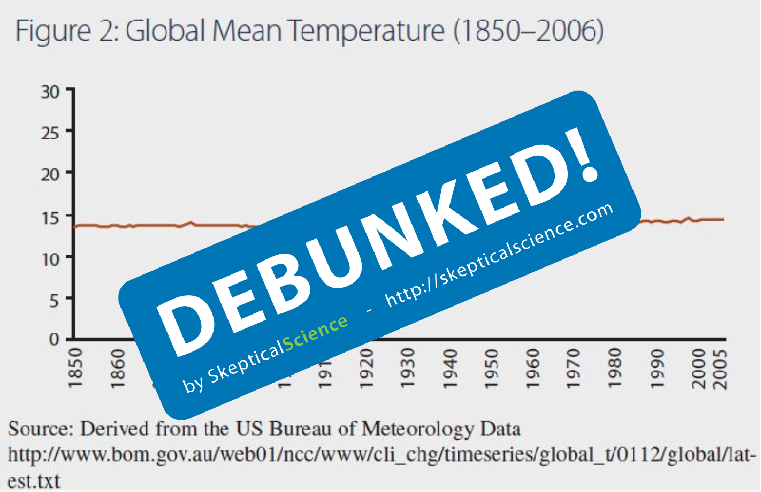
"The alarmist crowd likes to use 0.1ºC increments because it makes the y-axis look scary, when it is just a small temperature fluctuation.
Here is a chart with a normal y-axis. Not so scary, eh?"
This is an interesting misrepresentation of the science, not so much because D Böehm is using it, but because the very same misinformation gets presented by Dr Richard Lindzen on his blog in February of this year.
This is the chart D Böehm presented:
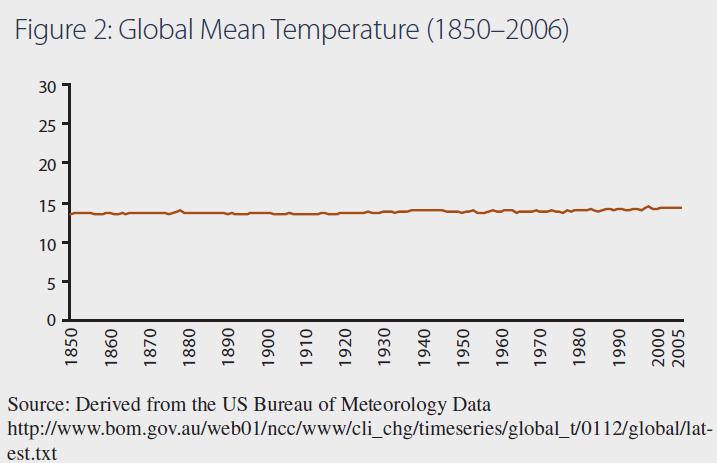
Fig:1 - Böehm's graph with a "normal" Y axis.
Confusing weather and climate
There is, of course, an element of truth here. You might define "normal" as the temperature range we experience on an annual basis at most locations around the planet. In fact, the annual temperature range can be greater than this in most mid-latitude locations. Anyone who has been following climate issues would instantly recognize this as yet another act of confusing weather with climate. Weather is what we experience on a day-to-day basis. Climate is what weather is doing over longer periods of time.
So, let's give some context to D Böehm's chart. Let's first put this chart in context of the past 500 million years.
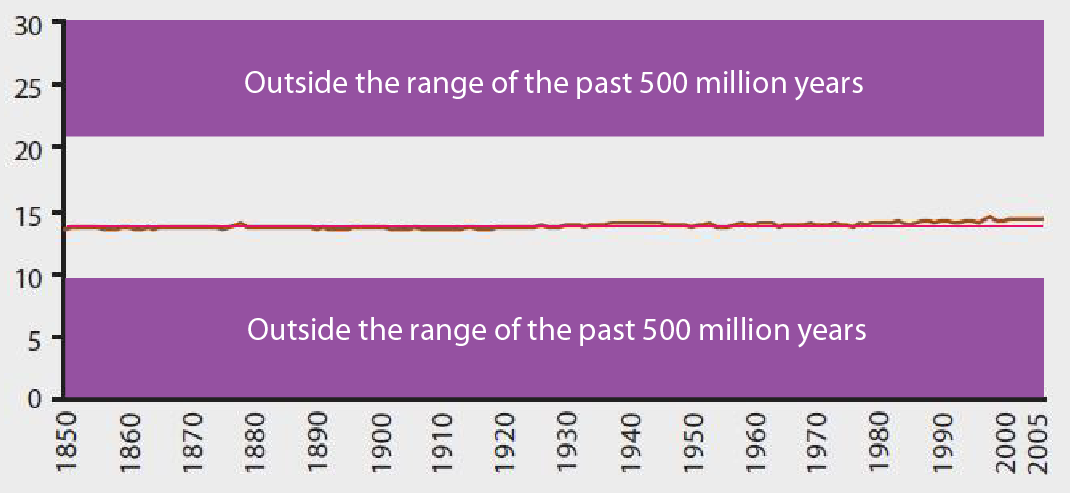
Fig: 2 - Limiting the Y axis to the past 500 million years (click for larger image)
This is taking us back to the Precambrian Explosion. This is the full range of global mean temperature seen on our planet that allowed the evolution of complex life. Anything outside of this +8°C to -6°C we just don't know. That's a range of just 14°C. In "normal Y-axis" terms (i.e., weather) this is laying on a sunny beach or a chilly hike in the mountains. In terms of climate these are the boundaries of the existence of life as we understand it on this planet. On the lower bounds we know it's a planet in deep glaciation. At the upper bounds we have tropical conditions near the poles.
Deep glaciation and ice free arctic
Let's now add some additional context: The glacial-interglacial cycles of the past 5 million years or so.
These global mean temperatures range from possibly +2°C to -6°C relative to current global mean temps. At the lower boundary we are talking about a mile high glacier covering Manhattan and near ice free conditions at the Arctic for the upper bounds. That mere 8°C change in global average temp means a vastly different planet.
Remember, in terms of weather, 8°C is only the difference between wearing a t-shirt or a sweater when you go outside. In terms of climate it's a mile of ice.
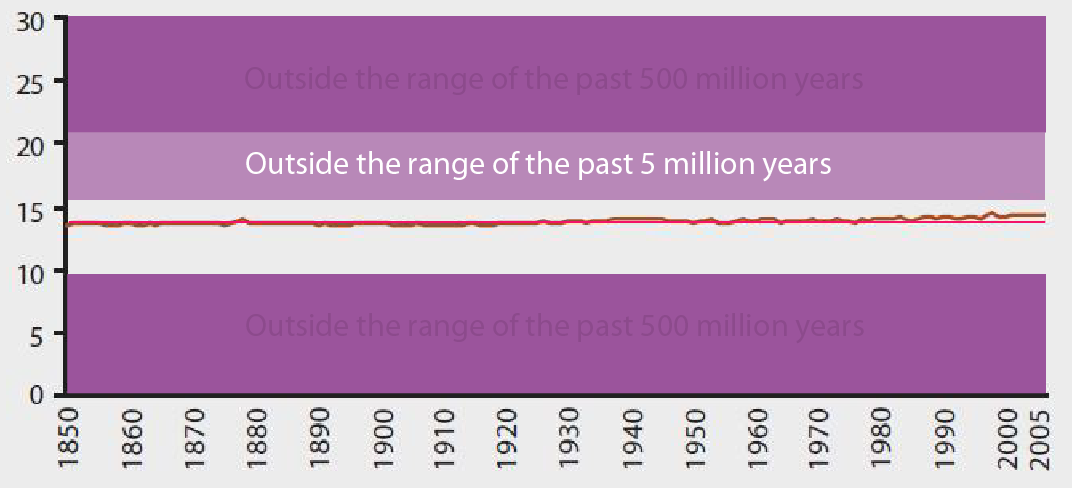
Fig: 3 - Limiting the Y axis to the past 5 million years (click for larger image)
The Holocene, our stable warm period
Now let's look at the Holocene. The Holocene is the period of the past 10,000 years which has given rise to human civilization. This narrow range of global average temperature is, in part, what has allowed us to prosper the way we have as a species. As we work our way up toward a global population of 10 Billion, we are very reliant upon this narrow stable climate to sustain the global agriculture that can support such a vast population of humans.
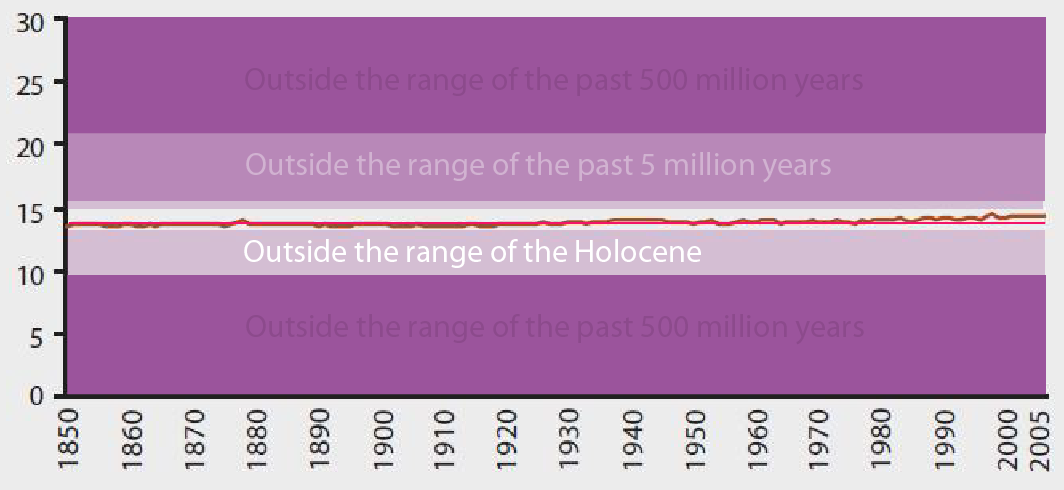
Fig: 4 - Limiting the Y axis to the Holocene (click for larger image)
Business as usual implications
IPCC estimates suggest that Business As Usual (BAU) use of fossil fuels will drive global average temperature up by 1.4—6.4°C by 2100 (IPCC AR4, Figure SPM.6, A1 scenarios).
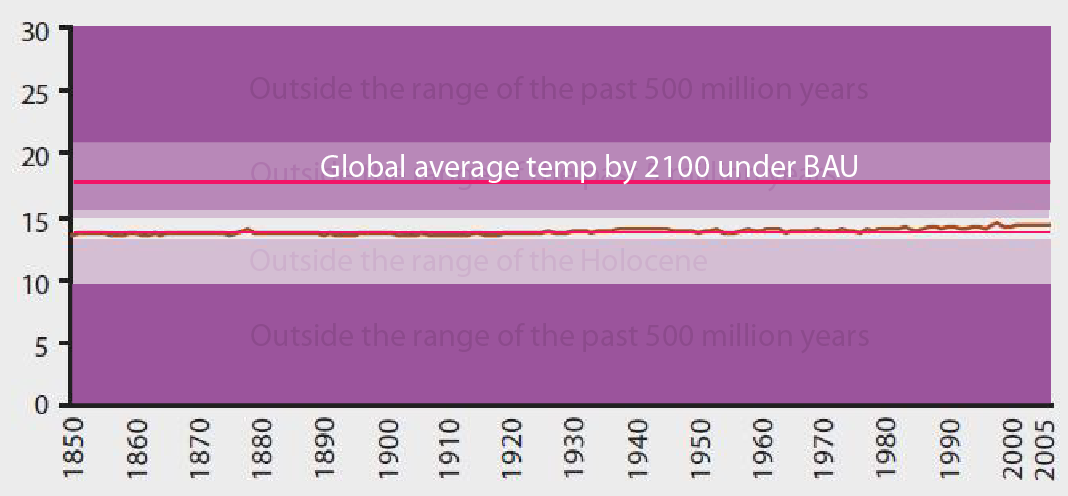
Fig: 5 - Projected temperature by 2100 with Business As Usual emissions (click for larger image)
The bigger question – the larger and more immediate concern – is where is the upper boundary for large scale sustainable agriculture necessary to feed the coming 10 Billion humans? We are certainly headed into new territory, well beyond the "normal" range of the Holocene, regardless of what we do. BAU use of fossil fuels will certainly drive global average temperature outside the range of the past 5 miliion years. If we do nothing we will likely see such conditions within the next 100 years.
Scary now, D Böehm?
How far are we going to push it? Exactly where on the Y-axis will things get evil?
Arguments


At least, I think that's how Böehm's reasoning goes.
Now, I will note that I feel anonymity on the Web is a good thing. Sock-puppeting, however, is another story entirely - if a moderator on a site misrepresents himself/herself as a rather virulent poster or two (who seem oddly immune to moderation), that is not honest. I don't care what a posters real name is, or where they work, their posts should make sense on their own. But if they are mixing roles as moderator of a site and an unrestrained sock-puppet poster of distorted information and insults, that's just downright deceptive. And calls into question the site itself - if there's deception in an aspect as important as moderation, what else is going on?
From the WUWT policy page: Hmm... I sense an inconsistency.
For a previous critique on this kind of graphic distortion, with no discernible purpose other than to deceive, see a comment on D Böehm/Smokey's work here.
---
Disclosure: I have been banned from that particular site since a post of mine that mentioned "D Böehm/Smokey", i.e. calling attention to the sock-puppet. Annoying, but rather unsurprising.
Evolution has not fitted us to occupy our niche for very long, in geological terms. What a stupid species.
The X-scale is another matter, but given the incompetence in choosing the Y-axis endpoints, I'm afraid the producer of the graph may have misunderstood the 1850-2006 column in the ref. It is NOT the time of the day, but the year (which again is not shown in the graph.)
Of course the above is just pure speculation about what's been going on in the mind of the producer of that graph. What I'm pretty sure of though, he doesn't want to draw attention to changes in global temperatures, and wants to have a bit of fun reading these responses.
Dick Lindzen is guilty of using the same form of trickery with the y axis scale to mislead his audience.
Chapter 1 - Rules of Bad Graphics
Rule 1: Show as little data as possible
Rule 2: Hide what data you do show .... hiding the data in the grid,.. hiding the data in the scale
.
.
People like Wainer and Edward Tufte (The Visual Display of Quantitative Information) are already aware of the tricks of people like Böehm and Lindzen.
I don't know who D Böehm is or what his or her background is, but for Dr Lindzen, who is an actual scientist, to use such a distortion is unforgivable. Choosing appropriate> values for the X and Y axes was one of the things that was drummed into us in secondary school science and I'm sure it must be a basic of any high school science education. We were always taught that one should choose values that start at or near the smallest data value and end at or near the largest one; for example if you were producing a graph showing people's height it would be absurd to start the Y axis at 0 cm as no person is 0 cm tall.
If such folk do not understand the significance appropriate display of the magnitude of variations relative to sequelæ, they should consider the tolerance of humans to changes in core body temperature. Doesn't matter if one describes it in terms of kelvin or celsius - a few degrees way from optimum spells death, and even fractions of a degree have profound effects. Attempting to illustrate the tolerable physiological range on a kelvin scale starting at absolute zero would be nothing short of ridiculous.
[*I see after refreshing the thread that bath_ed made the same observation]
Here is an example of Roger Pielke Jnr. misleading people by claiming the damage from Superstorm Sandy was about only half of the current estimate. His misleading graphic has not yet been updated.
Other tricks employed by fake skeptics include failing to remove the annual cycle in temperature and sea ice data (for example), failing to apply the inverse barometer correction in sea level data so as to reduce sea-level rise, using uncorrected ENVIROSAT data in order to lower the rate of sea-level rise. The list goes on and on and on.
At one point back in 2009 Roger Pielke Snr. was adamant that sea-level rise between 2006 and 2009 had "flattened" and that, by his misguided reckoning, this meant that sea levels was not rising at the upper bound of projections summarized in the IPCC reports. Now look where we are today, global sea level continue to rise at the upper end of the projections discussed in the IPCC assessment reports.
[Source]
All attempts by fake skeptics, contrarians and those in denial to do whatever it takes to hide the signal in a noisy data time series. They have no credibility and simply cannot and must not be trusted to report the science accurately and correctly, despite what they may try and claim to the contrary.
Here is a simple analogy for non-experts:
Imagine a mountain range that starts with small hills and works its way to taller mountains.
Now imagine looking at that mountain range from 50 miles away and being told that there are no tall mountains.
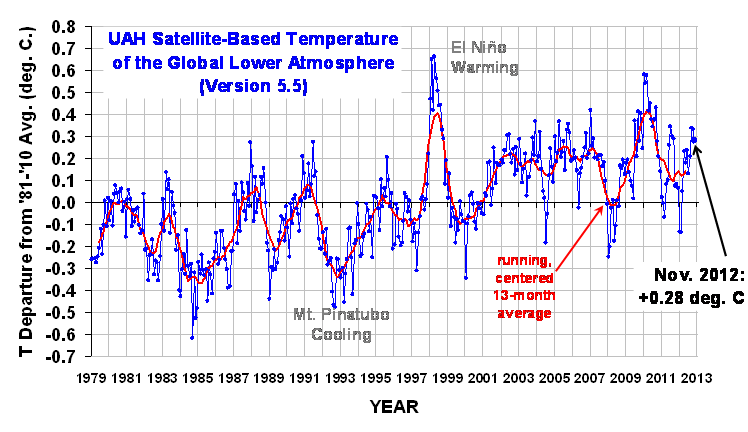
It is interesting that Dr Spencer has now removed the sine wave.
I noticed that too. I'm sure he'll put that sine wave back when we get the next La Nina. A volcano or two would also help.
http://mtkass.blogspot.co.nz/2012/11/greenland-melting.html
1) Add a Fig.4b. It would be same as Fig.4 except change the upper & lower Y-axis limits to the Holocene limits.
2) Add a Fig.5b. It would be the same as Fig.5 except change the upper Y-axis limit to equal the BAU red-line (or slightly greater) and change the lower Y-axis limit to equal the Holocene lower limit.
Doing so, would allow us to better see the true extent of the temperature changes relative to these properly set boundary limits. ... Excellent article!
Spencer's fit was actually a third order polynomial, and many of us disparaged him over the years for the statistical uselessness of prediction that it provided. I suspect that Spencer omits it now because the most recent values for time have reached the point where the record and the polynomial are starting to permanently part ways as the polynomial decends toward y = minus infinity.
Of course, Spencer can always go up an order or two - but then he'd be an even greater laughing stock (if such is possible) amongst people with any operant understanding of appropriate curve fitting...
Jimspy, 1/1000th of a degree Celsius would simply be a millidegree, just as 1/1000th of a metre is a millimetre!
Just how bad are we going to make this. That is the predicament we face and the choices we are making today.
Business as usual for a few more decades will likely take us to (and perhaps beyond) temperature territory visited only four times in the last 55 million years.
Humans as endotherms are frankly not designed for such conditions, and nor is the environment in which we evolved and on which we rely.
Denialists often show your temp graph (of the Cenozoic era from d18O proxy) but dress it in precisely opposite ethical considerations:
"the Earth was far warmer few My ago, so a little bit of warming ain't bad... Acrtic ice will melt and polar bears will go extinct as the result? So what? Extinctions have always been happening and old species have been replaced by new ones. Polar bear will be replaced by a better species"
When I'm looking at such thoughtless crank, and see other egotic cranks or such being our policymakers (i.e. reps in US, libs in Australia), I become depressed and I really wish that "polar bears" be replaced with "homo sapiens" in their silly, ignorant talk. If homo sapiens' collective mindset is determined by the lowest denominator (i.e. a crank above), then this species is not worth living on this planet.
"I become depressed and I really wish that "polar bears" be replaced with "homo sapiens" in their silly, ignorant talk"
Don't give up - it's the only way to defeat the mindset of the Cranks above.
The collective will win.
Note that the average depth of the ocean is 3790 meters. Graph that including zero, and I think it is safe to say that a 0.1% increase would look like no change at all -- a mere 3.79 meters.

Jimpsy, I know you're thinking from a PR point of view but there is a flaw in your terminology.
"Milli" is a well known term by the public for thousandths thus using it will give the impression of triviality.
A more public friendly response to this pseudoscientific nonsense would be to simply state that the chart has been "compressed" or "squashed down" or some similar phrase that the public can understand.
vrooomie
Most Americans, uneducated as they are, won't fully appreciate what a 6C rise would do; especially if they live in a relatively cool place.
Sorry this went way off topic (delete if necessary).
Typically, published journal articles do not present results in absolute temperatures but instead compare temperature to an average datum period which variance from is considered an anomaly. These average periods, in the US are from 1961-1980 and in the UK and Australia is 1961-1990, are intended to even out seasonal influences as well as the larger periodic cyclic processes such as ENSO (El Nino Southern Oscillation) and the AO (Arctic Oscillation)
Comparing temperature anomalies gives a bit more value in making comparisons and it also makes the statistical hurdles a bit less challenging.
As a point of reference here in the United States, most of our meteorological services are provided by NOAA and the National Weather Service. These agencies along with DoD, NASA, GISS, NFS, NPS, BLM are just a few of many agencies conducting climate studies as these changes affect our policy making.
Philip Shehan says:
January 4, 2013 at 8:43 am
The discussion with Boehm and others continues thereafter but his manipulation is evident here where my losing patience unfortunately leads me to being a little rude
Philip Shehan says:
January 4, 2013 at 4:42 pm
D Boehm,
Look, don’t try to blow smoke. You have been caught out manipulating the data sets to produce a chart which attempts to hide the trend.
Here is your chart going back to 1850:
http://tinyurl.com/bkoy8or
and here is your chart with the irrelevant camouflage removed.
http://tinyurl.com/af5xwmv
Your linear fit, stripped of the camouflage is inferior to the nonlinear fit:
http://www.skepticalscience.com/pics/AMTI.png
Later Boehm describes the non linear fit of the data as being “without provenace” and “John Cook’s cartoon”. I rebut that but I often get this from “skeptics” when I present this figure. Is anyone there able to give details of the actual temperature data set used and the function used for the nonlinear fit?
The fit appears to be a simple quadratic trend line.
I don't expect him to suddenly change his mind when these issues are pointed out...
Thanks KR for providing the "provenance" for the graph.
It's easier to see (Ha! What a concept...) if we look at the residuals after removing the trend, and even clearer if we use the non-obsolete HadCRUT4.
(The figures of 0.741546672 and 0.7562876736 come from finding the linear trend for the period and multiplying it by the number of years in that period; the green line is both to help visualise the residuals as well as prove the detrend figure is correct by showing the result is horizontal.)
If you try fitting a polynomial to those residuals then a quadratic does a nice job of showing what's left after the linear trend has been removed. Who to believe? Boehm/Smokey or the data?
The good thing about his claims is that they have to be one of the easiest to debunk. :-)
January 9, 2013 at 11:37 am
I recognise that this comment is decidedly "ad hominem' in the sense of being highly critical of Boehm personally as opposed to his adeas but I beleive the remarks are entirely justified being an reasonable description of his conduct and in the interest of exposing Boem's conduct I request it be posted.
D Boehm Stealy
[snip] I have previously drawn attention to your manipulation of Wood for trees data sets to flatten the appearance of the temperature data sets.
Your conduct [snip] .
Your chart in your post purports to be a plot of Muona Loa CO2 output and Hadcrut3 temperature data. It is nothing of the sort. As the WTF website states your use of the Isolate function means that you are plotting the noise after subtraction of the data, not the data itself.
[snip]
I will note that Boehme rescales the CO2 data by a factor of 0.25. That means, even if we accept his premise, each degree rise in temperature will only cause a 4 ppmv increase in CO2. With temperatures rising by approximately 1 degree C since the pre-industrial revolution, that means at best he has shown that 4 ppmv of the 110 ppmv increase in CO2 is due to increased temperatures.
Yet again we have a denier thinking only sufficiently to give himself a convenient sound bite, and not carrying the analysis through to see its full implications. That is, of course, because people who do carry the analysis through cease to be deniers (if they ever were).
Tom Curtis informs me that we are not permitted to discuss "ethical issues" here, and that is what I was really getting stuck into Boehm about.
Tom Curtis:
Thank you for your explanation. I am still a little confused. According to the Wood For Trees help section:
Mean (Months) Running mean over the given number of months. Keeps the number of samples the same, but smooths them by taking the average of that number of months around each sample.
Isolate (Months) Does the same running mean as 'mean', but then subtracts this from the raw data to leave the 'noise'
I thought the functions you mention were performed by (quoting from WFT help again)
Scale (Scale factor) Multiplies each sample by the given scale factor
Offset (Offset amount) Adds the given offset to each sample (can be negative)
Normalise - Scales and offsets all samples so they fall into the range 0..1
I posted the following to you over at WUWT but appear to be now banned. Do you have any comment?
My suspicions were aroused by informal inspection of the graph (and presentation of another graph from the same source in which extraneous processing had been used which did nothing but introduce extraneous lines which flattened the temperature data obscuring the curve of the data which the graph was supposed to be showing did not exist) shows that the match of the data sets is ridiculously good.
Given that temperature is affected by solar cycles, aerosols, volcanic eruptions, El Niño and la Nina events etc etc, how could there be such a near perfect correlation between temperature and CO2 content alone? Well we now know there isn’t.
Philip Shehan says:
Your comment is awaiting moderation.
January 10, 2013 at 9:19 pm
Fascinating. A poster is referring to a comment of mine which at the time of reading and typing this response has not appeared. I had read elsewhere that this person was in fact a moderator here who has posted under more than one name without disclosing their status. Quoting this source:
“Now, I will note that I feel anonymity on the Web is a good thing. Sock-puppeting, however, is another story entirely – if a moderator on a site misrepresents himself/herself as a rather virulent poster or two (who seem oddly immune to moderation), that is not honest. I don’t care what a posters real name is, or where they work, their posts should make sense on their own. But if they are mixing roles as moderator of a site and an unrestrained sock-puppet poster of distorted information and insults, that’s just downright deceptive. And calls into question the site itself – if there’s deception in an aspect as important as moderation, what else is going on?”
As no evidence was presented to support the assertion, I made no judgement. Now I have the evidence and I make the judgement.
Philip Shehan says:
January 10, 2013 at 1:10 am
Monckton of Brenchley says:
January 7, 2013 at 3:29 pm
Mr Shehan attributes to me a statement that I did not make. Some 40 per cent of the CO2 in the air is anthropogenic, not the 3 per cent that Mr Shehan attributes to me.
Thank you for the reply. The only sense in which I attributed the 3% to you was in that I found that this sentence was confusing in that it seemed to suggest this and asked for a clarification:
‘Philip Shehan says:
January 7, 2013 at 12:56 pm
Monckton of Benchley says:
“Today’s high CO2 levels – the 97% natural and the 3% human-released”
This may lead people to conclude that human activities have added only 3% to atmospheric CO2. In the interests of clarity, Monckton should point out that the 97% natural contribution refers to CO2 being recycled through the biosphere, whereas the 3% is that added to the atmosphere by the burning of fossil fuels which has seen the CO2 concentration rise from 280 ppm at the beginning of the industrial revolution to 390 ppm today This is a rise of 39%.’
We are afte rall in agrement that the anthropogenic CO2 content is 40%. As the 97% vs 3% figure is frequently given, and I am sure many other than myself misinterpret this statement, can you explain to me what you understand is meant by it. Can you also suggest an expalnation the other difficulty I had with this:
“I am also unclear about what time period the 3% covers. According to the following sources, the rise in atmospheric carbon was only 2.0 ppm in the decade 2000-2009, which is only a 0.52% rise over that period.”
Thank you again and hoping you can help